

.jpg)
A Nation That Decided to Talk to Itself
In 1994, if you lived in India, chances are your village, your street,
even your own home had no phone line at all. Tele-density — the number of
phones per hundred people — stood at less than one. A telephone was a rare and
almost ceremonial object, often shared by an entire neighborhood or kept in a
single shop that everyone knew as "the phone place." A "trunk
call" to another city was an event people planned for, sometimes waiting
hours at a telegraph office, filling out a slip, and hoping the line would
connect before the operator's shift ended.
Three decades later, that same country carries over 1.3 billion
telephone connections — more connections than there are people in most
continents combined. Tele-density has climbed past 90 per 100 people
nationally, urban tele-density has crossed 150%, and even rural India, once the
hardest and most expensive place to reach, now sits above 60% and keeps
climbing every quarter. Total internet subscribers have crossed the one-billion
mark, with broadband alone accounting for the overwhelming majority of that
base.
This is not, at its heart, a story about wires, satellites, and
towers. It is a story about a country that decided distance would no longer
decide who got to be heard, who got to learn, who got to trade, and who got to
belong to the modern economy.
The Slow Climb Before the Sprint
To appreciate how far India has come, it helps to remember how gradual
the early years were. Liberalization in the early 1990s opened the door to
private telecom operators, but for most of that decade, growth was measured in
single digits — a percentage point of tele-density gained here, a new circle
licensed there. Mobile phones existed but were priced for the elite: incoming
and outgoing calls were both charged, handsets cost a small fortune relative to
average incomes, and owning a mobile phone was, for most Indians, an aspiration
rather than a plan.
The 2000s changed the arithmetic. Falling handset prices, the entry of
new operators, and a shift toward calling-party-pays pricing brought mobile
telephony within reach of the middle class first, and then, gradually, everyone
else. By the time smartphones began appearing in meaningful numbers in the
early 2010s, India had already built the habit of mobile-first communication —
most Indians never owned a landline at all. They leapt straight from no phone
to a phone in their pocket, skipping an entire generation of infrastructure
that other countries had spent decades building and paying off. Because India
never had to unwind an expensive legacy of copper wire and fixed-line billing,
it could build its national network around the technology of the future rather
than the technology of the past — every rupee of new investment going toward
towers, fibre backhaul, and spectrum.
Chasing the Last Mile
The easy part of any telecom story is the city. Towers go up fast where
the customers, and the profits, already are. Dense urban clusters offer
operators a straightforward business case: thousands of potential subscribers
within a few square kilometres, existing power and road infrastructure, and
revenue that arrives almost as soon as the tower is switched on. India's real
achievement lies in the parts of the map that used to be blank on every telecom
operator's business plan — the forests of Chhattisgarh, the terraced valleys of
Arunachal Pradesh, the scattered islands of Lakshadweep, and the high-altitude,
thinly populated border villages of Ladakh.
This is where BharatNet comes in — one of the largest rural broadband
efforts ever attempted anywhere in the world, and arguably one of the most
ambitious public infrastructure undertakings of India's independent history.
The programme is now laying optical fibre toward roughly 260,000 Gram
Panchayats, the elected village-council units that form the backbone of rural
local governance, with tens of billions of rupees committed to reach
settlements that never had so much as a landline, let alone broadband. Beyond
the Gram Panchayats themselves, the amended programme extends fibre
connectivity, on a demand basis, to hundreds of thousands of non-Gram Panchayat
villages as well.
Where fibre cannot easily go — across mountain passes, through dense
forest cover, or into small island territories separated from the mainland by
open water — satellite broadband has stepped in, bringing high-speed internet
to places where laying cable would have taken years and cost far more than the
population there could ever be expected to repay through subscriptions alone.
The national average fixed broadband speed has climbed past 60 Mbps under the
government's Broadband Mission, and rural internet subscriptions continue to
rise year after year, now standing at roughly 48 per 100 rural residents —
proof that the "last mile" is steadily becoming the "next
mile," not a dead end.
Add to this the 4G Saturation Project, aimed squarely at the tens of
thousands of villages still without reliable mobile coverage, and a pattern
becomes clear: India's telecom expansion isn't chasing the easiest markets
first and leaving the rest for later. It is, deliberately and at enormous
expense, chasing everyone — including the villages that will never be
profitable on their own, because the goal was never profit alone.
The Cheapest Data on Earth — By Design, Not By Accident
Here is the part of the story that genuinely startles outsiders when
they first hear it. In much of the wealthy world, a gigabyte of mobile data can
cost several dollars — in the United States it runs close to six dollars, and
in Canada, Switzerland, and parts of Western Europe it isn't much better. Even
accounting for higher average incomes in those countries, mobile data there
remains a meaningful monthly expense for ordinary households. In India, that
same gigabyte can cost a matter of cents — often somewhere between five and
twenty cents, depending on the plan and operator.
Year after year, when researchers compare mobile data prices across
more than two hundred countries, India lands in the handful of cheapest markets
on the planet, trading places near the very top with Israel, Italy, and a small
club of hyper-competitive markets — while offering that data not to a few
million affluent city-dwellers, but to well over a billion people spread across
every kind of terrain and income level the country contains. It is one thing
for a small, wealthy nation to offer rock-bottom data prices. It is another
thing entirely for a country of India's size and diversity to do the same, at
scale, for everyone from a software engineer in Bengaluru to a fisherman's
family on the Odisha coast.
This wasn't luck, and it wasn't charity. It came from a deliberate
collision of forces. A mobile-first population that skipped landlines almost
entirely meant there was never a competing legacy business to protect. Fierce
competition between operators, especially after a major new entrant disrupted
the market in the mid-2010s by offering free voice calls and dirt-cheap data to
build a subscriber base overnight, broke the old pricing models within months.
Rivals were forced to match the new pricing or lose customers en masse, and the
entire market reset around a much lower price floor almost overnight. A
massive, sustained investment in 4G and now 5G infrastructure gave operators
the capacity to carry vastly more data traffic without a proportional increase
in cost. And a policy environment that treated affordable connectivity as
something close to a public good — rather than a luxury reserved for those who
could pay a premium — kept the government leaning toward expansion and access.
The result is an everyday reality that would sound almost impossible
in many other parts of the world. An autorickshaw driver checking ride
requests, a college student attending an online lecture, and a small shopkeeper
managing digital payments can all stream video, make video calls, and run
banking apps for a fraction of what someone in a rich country pays for the
equivalent megabyte. Data, once a luxury reserved for those who could afford a
home internet connection, has become something close to a basic utility — as
ordinary and unremarkable as electricity or running water in most parts of
urban and increasingly rural India.
What Cheap, Wide Connectivity Actually Buys a Country
None of this matters much as a standalone statistic. A cheap gigabyte,
on its own, is just a number in a comparison table. It matters because of what
it quietly enables, day after day, in the lives of people who would otherwise
have been shut out of entire categories of modern life.
Affordable, wide-reaching telecom is the quiet infrastructure behind
India's digital payments boom, where instant, fee-free transfers now happen
routinely in villages that had no bank branch within reachable distance a
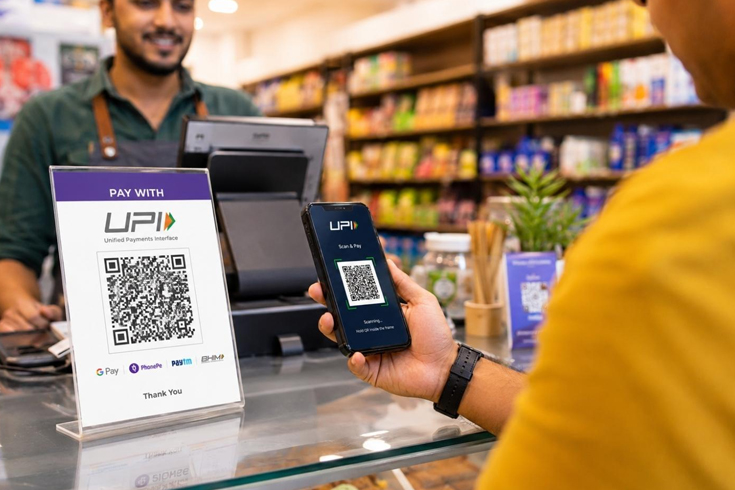
decade ago. A single unified payments interface, built on top of this
connectivity, now processes billions of transactions a month, letting a street
vendor accept a payment as easily as a large retailer does. It's behind
telemedicine reaching Primary Health Centres and Anganwadis — village-level
childcare and nutrition centres — that once had no way to consult a specialist
without a full day's journey to a district hospital.
It's behind a farmer checking mandi prices on a smartphone before
deciding where to sell a harvest, rather than relying on a middleman's word and
losing bargaining power in the process. It's behind a student in a small town
attending an online class originally designed for a metropolitan classroom,
closing a gap in educational access that once tracked almost perfectly with
geography and family income. And it's behind a migrant worker in a distant city
sending money home to family in a village within seconds rather than days,
through an app rather than a long, unreliable chain of intermediaries.
Cheap data, in other words, has become one of India's most effective
informal anti-poverty tools — not because it was designed from the outset as a
welfare programme, but because it removed cost as a barrier to information,
commerce, healthcare access, and opportunity. When the price of participation
drops close to zero, participation stops being a privilege and starts being a
default.
A Story With Regional Texture
It would be a mistake to tell this as one uniform national story,
because the texture varies enormously from region to region, and that variation
is part of what makes the overall achievement so remarkable. In the hill states
of the north-east, where terrain alone makes every kilometre of fibre or every
tower foundation dramatically more expensive to build than on the plains,
satellite links and painstaking manual cable-laying have had to substitute for
the faster, cheaper rollout possible elsewhere. In flood-prone parts of Assam
and Bihar, network infrastructure has had to be built with resilience to
seasonal inundation in mind, accepting a higher upfront cost in exchange for a
network that keeps working when it is needed most — during a crisis, when
communication often matters more than at any other time.
Coastal and island territories present their own puzzle entirely.
Lakshadweep and the Andaman and Nicobar Islands are separated from the mainland
by open sea, making traditional fibre-laying either prohibitively expensive or,
for the most remote outposts, essentially impossible with current economics.
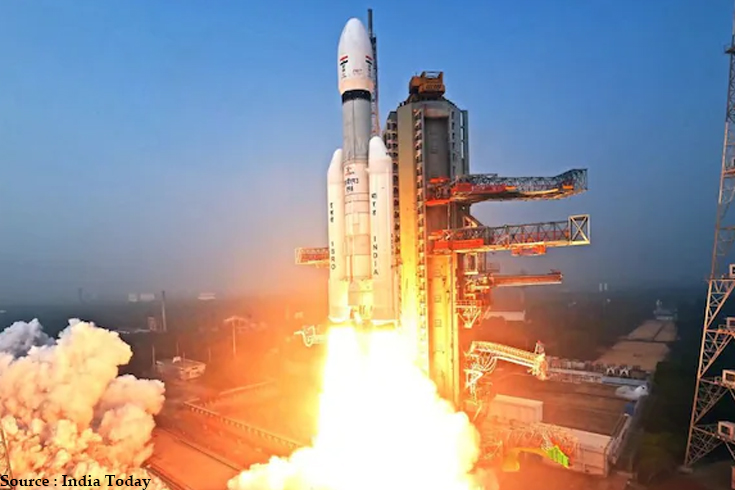
Satellite capacity, drawn from India's own indigenous satellite programme, has
stepped in to close that gap, meaning that even a small fishing community on a
remote island can, today, access broadly the same digital services as a
resident of a major mainland city, even if the underlying technology delivering
that access looks completely different.
This regional diversity is worth dwelling on because it underscores
that "reaching every corner of India" was never going to be solved by
one single technology. It required a layered approach — fibre where fibre made
sense, satellite where fibre did not, and continuous policy adjustment as the
government learned, region by region, what actually worked on the ground.
The Economic Ripple Effect
Telecom's contribution to India's economy extends well beyond the
sector's own revenue figures, sizeable as those are. A modern communications
network functions as what economists sometimes call general-purpose
infrastructure — much like electricity or roads, its value isn't confined to
the industry that builds and operates it, but spreads outward into every other
sector that depends on it. E-commerce and logistics platforms now reach small
towns and villages that traditional retail chains never found commercially
viable to serve, because the cost of reaching a customer digitally is a
fraction of the cost of opening a physical store in a low-density market.
Financial inclusion, long a stated policy goal that struggled against
the practical limits of branch banking in a country as vast as India, has
advanced dramatically once digital payments and mobile banking apps became
available to anyone with a basic smartphone and an affordable data plan.
Millions of small businesses — roadside stalls, home-based tailoring
operations, small workshops — have been able to accept digital payments and, in
doing so, begin building the kind of transaction history that can eventually
support access to formal credit, something effectively unreachable for most of
them under a cash-only economy.
Even sectors as traditional as agriculture have felt the effect.
Government advisory services now push weather alerts, pest warnings, and price
information directly to farmers' phones, in local languages, at a cost so low
it barely registers as a line item against the value of a saved crop or a
better-negotiated sale.
The Road Ahead
The story isn't finished, and it would be dishonest to suggest
otherwise. Thousands of villages still wait for their first reliable 4G signal,
and while the rural-urban gap in connectivity has narrowed sharply over the
past decade, it has not closed entirely — rural tele-density, while rising
steadily, still trails urban tele-density by a wide margin. Infrastructure in
the most remote and difficult terrain remains expensive to build and, in some
cases, expensive to maintain against monsoon damage, landslides, and the sheer
logistics of servicing equipment in places that can take a full day to
physically reach.
But the direction of travel is unmistakable. Fibre continues pushing further into forests and hill districts under the amended BharatNet programme. Fifth-generation mobile networks are expanding city by city and, increasingly, town by town, bringing dramatically faster speeds to a population that has already shown, through its adoption of 4G, that it will use additional bandwidth the moment it becomes available and affordable. Early research and policy groundwork for sixth-generation networks is already underway, positioning India not merely as a consumer of the next generation of global telecom technology but, potentially, as one of its contributors. Alongside this, a growing push toward domestic manufacturing of telecom equipment aims to build a more resilient, self-reliant supply chain for the infrastructure that underpins all of this progress.
What began in 1994 with a fraction of a phone per hundred people has
become one of the great infrastructure stories of the century: a billion-plus
people connected, at a price the rest of the world can barely believe, with the
hardest-to-reach villages still climbing onto the network one Gram Panchayat,
one satellite link, and one new tower at a time. It is, in the truest sense, a
story of a country choosing to make sure that no address — however remote,
however difficult to reach — would be the reason someone was left unheard.