

The hidden dangers behind Delhi’s air quality numbers
Delhi's air pollution problem is more complicated than a single AQI number. Every day, millions of people travel through traffic-filled roads, construction zones and industrial areas, breathing air that contains a mixture of harmful pollutants. While the Air Quality Index (AQI) helps people understand the general condition of the air, it does not reveal the complete picture of the health risks associated with air pollution.
The official Air Quality Index, as calculated by India's Central Pollution Control Board (CPCB), is represented by the pollutant with the highest sub-index. This means that the overall AQI reflects the worst-performing pollutant rather than the combined concentration or potential health impact of all pollutants present in the air.
As a result, the AQI may not fully communicate the combined risks of exposure to multiple pollutants.
1. One AQI Number Cannot Tell the Whole Story
The AQI provides a simplified measurement of air quality by considering different pollutants, including particulate matter (PM2.5 and PM10), nitrogen dioxide (NO2), sulphur dioxide (SO2), carbon monoxide (CO), ozone (O3), ammonia (NH3) and lead (Pb).
However, the final AQI value is determined by the highest individual pollutant sub-index. Other pollutants may also be present at harmful levels without significantly changing the overall AQI number.
For Delhi residents, this means that checking the AQI alone may not provide enough information to understand every potential exposure risk.
2. Dangerous Chemicals That AQI May Not Capture
Some harmful air pollutants are not included in the standard AQI calculation. These include:
Benzene: A toxic chemical commonly associated with vehicle emissions and fuel evaporation. Long-term exposure can increase the risk of blood-related cancers.
Arsenic: A toxic substance that may enter the air through certain industrial activities and combustion processes.
Nickel: A metal that can be released through industrial emissions and fuel combustion. Certain nickel compounds are carcinogenic.
These substances are important because exposure to some of them can have serious long-term health consequences, even though they are not represented in the standard AQI number.
3. Traffic and Vehicle Emissions Add to Delhi's Pollution
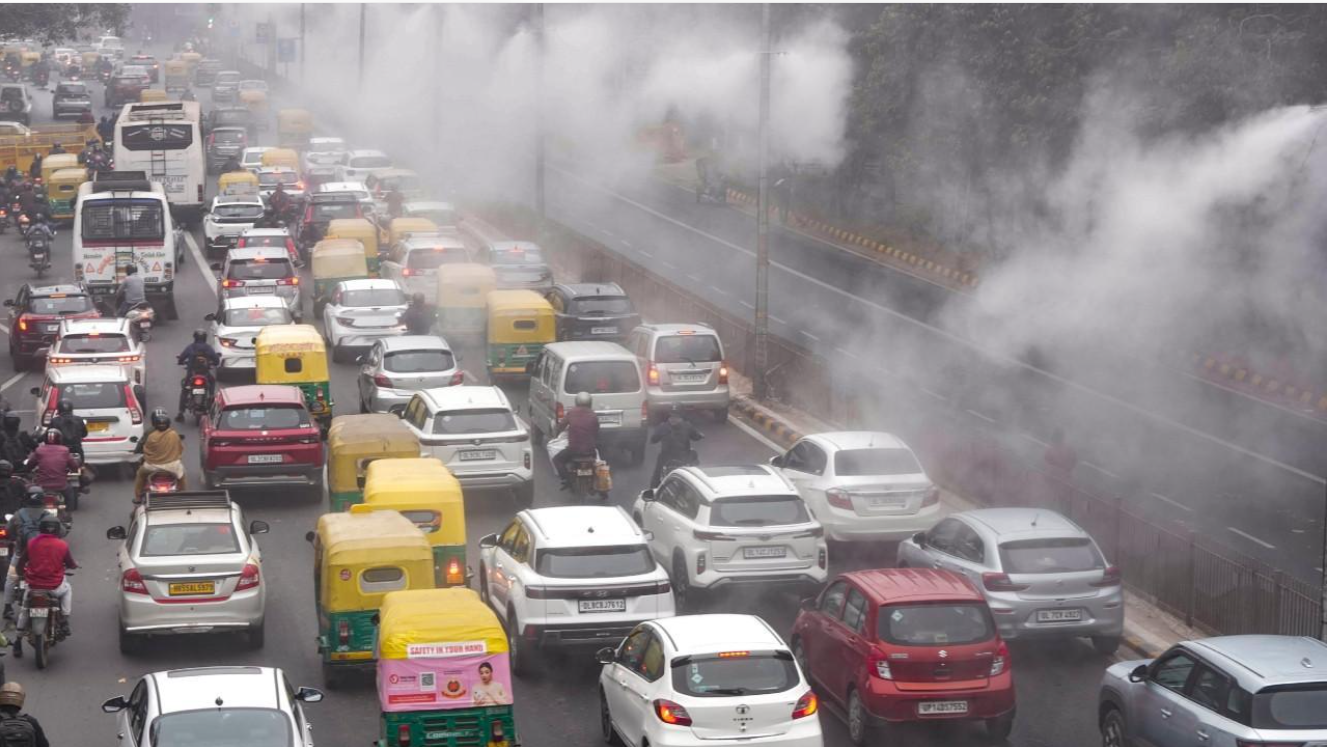
Heavy traffic is one of the visible contributors to Delhi's air pollution. Cars, buses, trucks, auto-rickshaws and motorcycles release pollutants through fuel combustion and exhaust emissions.
Vehicle-related pollution can contribute to particulate matter, nitrogen oxides, carbon monoxide and other harmful substances.
People who regularly travel along busy roads, traffic intersections and congested commercial areas may experience repeated exposure to these emissions.
4. The Health Impact Goes Beyond Breathing Problems
Air pollution affects more than the respiratory system. Prolonged exposure to harmful pollutants can contribute to several health problems, including:
Asthma and breathing difficulties
Reduced lung function
Eye, nose and throat irritation
Cardiovascular diseases
Increased risk of certain cancers from exposure to specific carcinogenic pollutants
Children, older adults and people with existing respiratory or cardiovascular conditions may be particularly vulnerable.
5. Why Delhi Needs Better Air Pollution Monitoring
Monitoring air pollution requires more than reporting one overall AQI figure. People also need access to information about individual pollutants, their concentrations, pollution sources and long-term exposure patterns.
Greater monitoring of hazardous chemicals such as benzene, arsenic and nickel could help provide a more comprehensive understanding of air quality and its potential health effects.
Better public awareness and transparent pollution data are important steps towards addressing Delhi's air pollution crisis.
Conclusion: Look Beyond the AQI Number
The AQI is an important tool for communicating air quality, but it should not be treated as a complete measurement of every health risk associated with polluted air.
Delhi's pollution challenge involves a complex mixture of particulate matter, harmful gases, vehicle emissions and potentially toxic chemicals. Understanding these pollutants individually, alongside the overall AQI, is essential for creating better public awareness and stronger pollution-control measures.
The real question is not just how polluted the air is today, but what exactly we are breathing every day.