


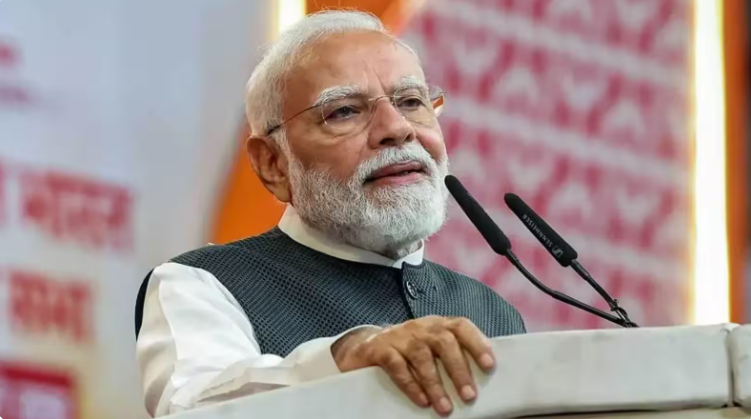
Prime Minister Narendra Modi questions Indian companies over employee salaries, job creation and product quality while urging businesses to strengthen domestic manufacturing and reduce import dependence
New Delhi: Prime Minister Narendra Modi delivered a strong message to India's corporate sector on Thursday, November 19, 2026, questioning major businesses over their contribution to employment generation, employee salaries and the quality of products manufactured for Indian consumers.
Addressing the 100th Annual General Meeting and Annual Convention of the Federation of Indian Chambers of Commerce and Industry (FICCI) at Bharat Mandapam in New Delhi, Modi urged Indian companies to move beyond their comfort zones and take greater responsibility for the country's economic development.
His remarks included a sharp criticism of corporate businesses that, according to him, have benefited from government tax reductions and business reforms without adequately passing those benefits on to employees.
PM Modi Questions Companies Over Salaries and Job Creation
One of the most notable moments of the speech came when Modi discussed corporate tax reductions and income tax relief.
He pointed out that the basic corporate tax rate had been reduced from 30 per cent in 2014 to 22 per cent. He also referred to the government's income tax relief, under which eligible individuals can have no income tax liability on income up to Rs 12 lakh under the applicable new tax regime.
However, he questioned whether companies had increased employee salaries or expanded their workforce in response to the benefits received.
Using the phrase "Your appetite is insatiable", the Prime Minister criticised businesses for continuously seeking government support without making sufficient contributions towards employees and job creation.
His message was clear: economic reforms and tax benefits should translate into better wages, more employment opportunities and stronger business growth.
India Inc Must Improve Product Quality
Modi also raised concerns about the quality of products manufactured by Indian companies.
He said that India's large domestic market should not become an excuse for businesses to compromise on product quality.
With a population of approximately 1.4 billion, India offers companies a huge consumer base. However, the Prime Minister argued that domestic manufacturers must produce goods that can compete with international standards.
He urged industrialists to ensure that Indian consumers receive high-quality products rather than treating the domestic market as a guaranteed destination for whatever they manufacture.
Reducing Import Dependence Must Be a Priority
Another major theme of the address was the need to strengthen India's domestic manufacturing capabilities.
Modi highlighted the country's dependence on imported materials and specialised products in several important industries.
He referred to the pharmaceutical sector, noting that although India is recognised globally for its finished medicines, it continues to depend on imports for active pharmaceutical ingredients (APIs), bulk drugs and other intermediates.
He also highlighted opportunities in the iron and steel industry, pointing out that India exports iron ore but still imports certain specialised finished steel products.
The aluminium sector was another area where he called for greater domestic production capacity, particularly for specialised alloys and industrial products.
Greater Corporate Investment Needed in Agriculture
The Prime Minister also encouraged Indian businesses to invest more actively in agriculture and food processing.
He noted that India's share of global agricultural exports remains around 2 to 2.5 per cent despite the country's significant agricultural production capacity.
According to Modi, businesses should work directly with farmers, develop reliable procurement systems and manufacture products that meet international demand.
He suggested that corporate investment could help improve agricultural supply chains, processing facilities and export opportunities.
Free Trade Agreements Offer New Opportunities
Modi also urged industry leaders to make better use of India's free trade agreements with international markets.
He questioned whether Indian businesses had developed clear strategies to benefit from the new trade opportunities created through these agreements.
He encouraged companies to study international markets, understand changing consumer demand and prepare products that can compete globally.
The Prime Minister also called on larger corporations to support smaller businesses in improving product quality, manufacturing capacity and operational scale.
Conclusion
Prime Minister Narendra Modi's address to India Inc highlighted an important question about the relationship between corporate growth and national economic development.
While government reforms, tax reductions and business-friendly policies can create opportunities, companies also have a responsibility to generate employment, improve employee compensation, invest in domestic manufacturing and deliver quality products.
His message to the corporate sector was that India's economic progress cannot depend on government initiatives alone. Businesses must also contribute through innovation, investment and responsible growth.
The central message was simple: corporate success should not be measured only by profits, but also by the jobs created, wages paid and value delivered to the country.


.png)
